

How to Clean Log Burner Glass (and Keep It Clear)
Cleaning log burner glass is simple: usually just damp newspaper and a pinch of cool wood ash. Blackening comes from damp wood, a cool fire, or vents closed too far.
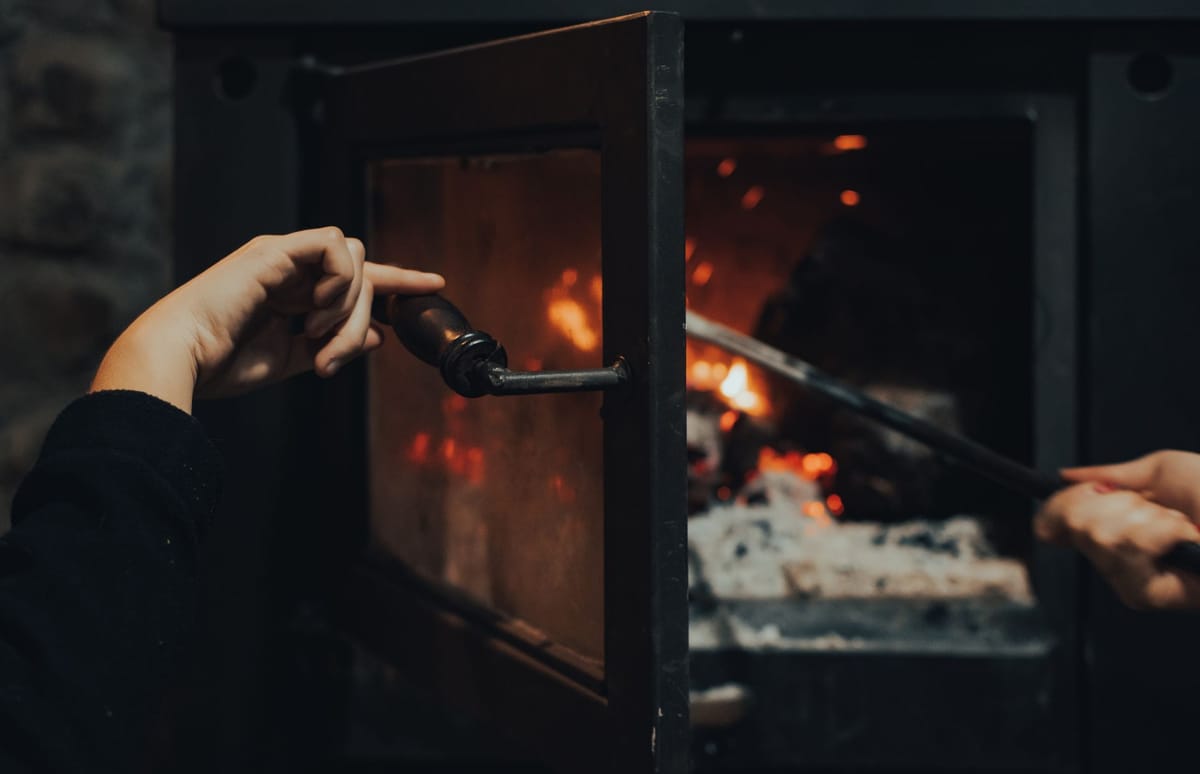
Why log burner glass goes black
The dark film is condensed tar and soot left when smoke touches the cooler glass. A hot, clean fire makes very little. Persistent blackening usually means wet or unseasoned wood, running the stove too cool, or closing the air vents down too far to make a load last.
The damp newspaper and ash method
With the stove cold, dampen a sheet of newspaper or a microfibre cloth and dip it in a little fine, cool ash, which is a mild natural abrasive. Rub in gentle circles over the marks, wipe with a fresh damp cloth, then buff dry. Keep water off the door rope seal.
Stronger cleaning and what to avoid
For baked-on tar, dab a dedicated stove glass cleaner onto a cloth, leave a minute, wipe and buff dry. Never use wire wool, metal scourers or harsh oven cleaners: they scratch the glass or damage the seals. Always clean when cold.
| Method | How to do it | Best for |
|---|---|---|
| Damp newspaper and ash | Dip damp paper in cool ash, rub in circles, wipe clean and buff dry | Everyday soot and light tar |
| Dedicated glass cleaner | Apply to a cloth, leave briefly, wipe off and buff dry | Stubborn baked-on tar |
| Dry everyday wipe | Buff a light haze with dry kitchen roll the morning after | A quick daily touch up |
How to stop it blackening again
Burn only dry, seasoned wood at around 20 percent moisture or less; a cheap meter helps. Keep the top vent open enough to feed the airwash, get the stove up to temperature, and avoid shutting the vents right down to slumber the fire, which is when tar builds up.