Chimney Fires: Causes, Warning Signs & Prevention
A chimney fire happens when flammable deposits in the flue, usually creosote, catch light and burn fiercely. It is a serious risk, but a very preventable one.
What is a chimney fire?
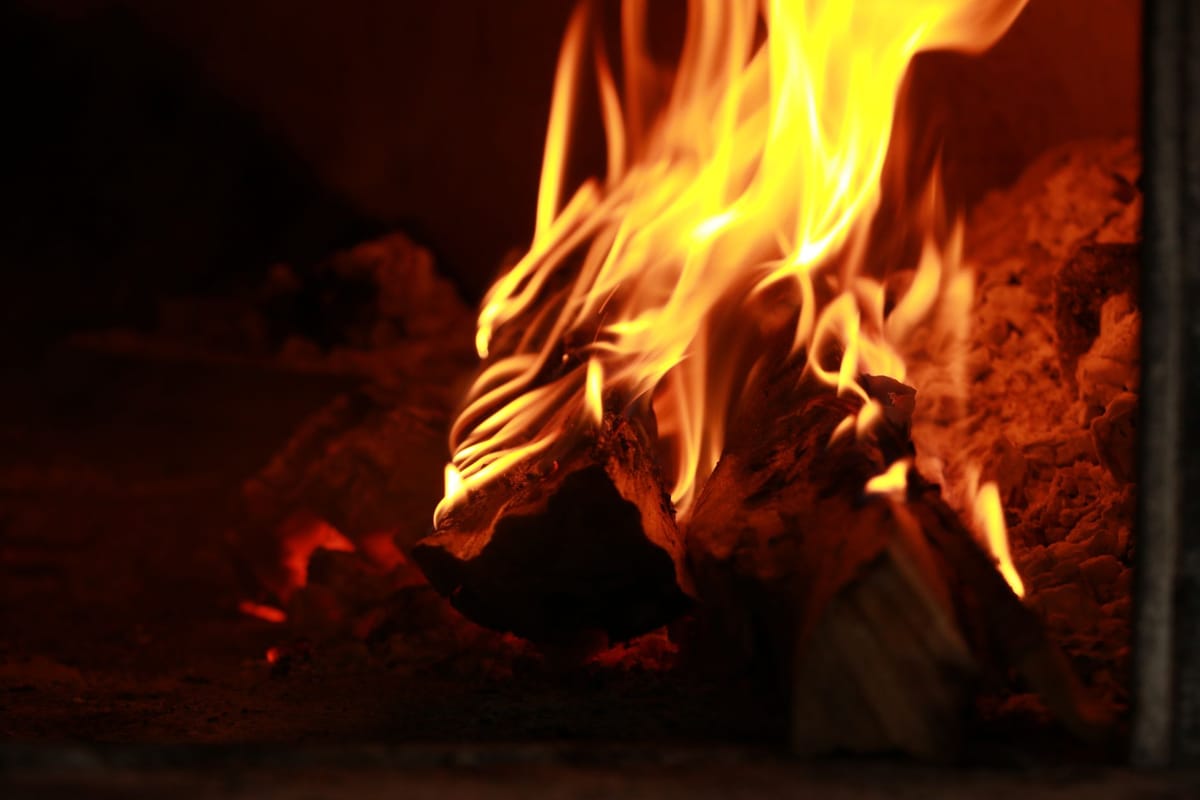
A chimney fire burns inside the flue rather than in the grate, usually fuelled by creosote on the flue walls. Some roar dramatically from the pot; others smoulder almost silently. Both can crack the flue and let fire or smoke reach the rest of the house.
What causes a chimney fire?
Nearly every chimney fire comes down to flammable build-up or a blockage in the flue. The main causes are creosote, birds nests, burning wet wood, slow smouldering fires, and going too long between sweeps.
| Cause | How to prevent it |
|---|---|
| Creosote build-up in the flue | Have the chimney swept regularly and burn hot, clean fires |
| Birds nests and other blockages | Fit a bird guard or cowl and have the flue checked each year |
| Burning wet or unseasoned wood | Burn only dry, seasoned wood under 20 percent moisture |
| Infrequent sweeping | Book at least an annual sweep, more often for heavy use |
| Slow, smouldering fires | Run brighter fires with enough air rather than damping right down |
Warning signs
A fierce fire gives a loud roaring or rumbling, like an aircraft passing overhead, with dense smoke and sparks from the pot. Quieter signs include an acrid smell, crackling from the flue, and intense heat from the chimney breast.
What to do and how to prevent it
Treat a fire as an emergency: get everyone out, call 999, and if safe close the air vents and stove door to starve it of oxygen. Never use the chimney again until a professional has inspected it. To prevent fires, sweep yearly, burn dry seasoned wood, fit a bird guard, and keep smoke and carbon monoxide alarms working.